True Compliance in Customs: Risks Never Ends Unless Every Aspect of the Transaction Is Taken Account
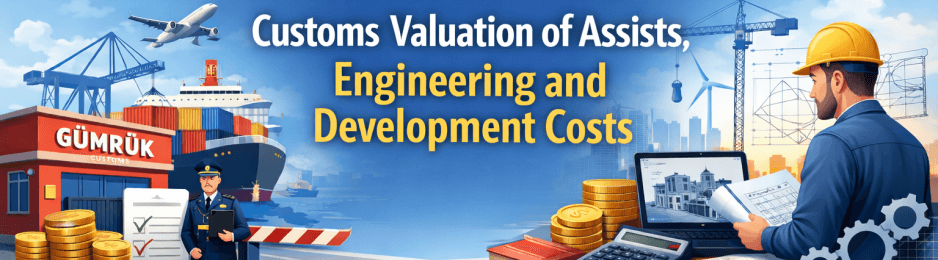
However, the moulds used to produce these parts were designed by the importer and provided to the manufacturer free of charge. Since these moulds are intrinsic to the product’s manufacturing cost, their value must be added to the customs value. If this information is overlooked, the customs authority may determine that the declared value is understated—resulting in tax deficit, interest, penalties, and potential harm to the company’s compliance reputation.
A similar issue arises when the imported goods are sold under a brand license, and the importer pays a royalty or license fee to the manufacturer or a third-party rights holder. If that payment is directly related to the goods, it must be included in the customs value. The fact that a royalty is paid separately from the commercial invoice does not make it “outside the transaction”; on the contrary, once a link can be established, it becomes part of the declared value.
This complexity increases even further in multinational enterprises , where transfer pricing and customs valuation must be aligned. Intra-group discounts, production support payments, software or know-how charges, brand usage, mould transfers, and other intangible contributions must all be assessed correctly. When these elements are misinterpreted or omitted, customs authorities tend to subject such transactions to related-party investigation . Inaccurate or incomplete analysis doesn’t only create financial exposure—it also triggers audit inquiries, prolongs clearance times, and may lead to port delays, warehouse storage costs, and disrupted customer commitments. What begins as a valuation issue can quickly evolve into a compliance problem that damages the company’s reputation and supply chain performance.
However, the moulds used to produce these parts were designed by the importer and provided to the manufacturer free of charge. Since these moulds are intrinsic to the product’s manufacturing cost, their value must be added to the customs value. If this information is overlooked, the customs authority may determine that the declared value is understated—resulting in tax deficit, interest, penalties, and potential harm to the company’s compliance reputation.
A similar issue arises when the imported goods are sold under a brand license, and the importer pays a royalty or license fee to the manufacturer or a third-party rights holder. If that payment is directly related to the goods, it must be included in the customs value. The fact that a royalty is paid separately from the commercial invoice does not make it “outside the transaction”; on the contrary, once a link can be established, it becomes part of the declared value.
This complexity increases even further in multinational enterprises, where transfer pricing and customs valuation must be aligned. Intra-group discounts, production support payments, software or know-how charges, brand usage, mould transfers, and other intangible contributions must all be assessed correctly. When these elements are misinterpreted or omitted, customs authorities tend to subject such transactions to related-party investigation. Inaccurate or incomplete analysis doesn’t only create financial exposure—it also triggers audit inquiries, prolongs clearance times, and may lead to port delays, warehouse storage costs, and disrupted customer commitments. What begins as a valuation issue can quickly evolve into a compliance problem that damages the company’s reputation and supply chain performance.
Therefore, addressing all aspects of a transaction is not merely a technical exercise for customs staff of the company—it is a matter of sustained awareness and coordination within the company itself. Achieving accurate valuation and declaration requires that accounting manages cost and payment records transparently, logistics provides clear delivery and freight information, procurement ensures contract and pricing consistency, production identifies tooling, mould, and auxiliary materials, and finance tracks royalty, know-how, and related-party payments. Without this cross-departmental collaboration, even one department’s perfect performance cannot make the overall declaration “correct.”
Crucially, these evaluations must be done at the earliest stages—during quotation, contract drafting, and sourcing decisions. Questions such as who owns the mould, under what conditions royalties arise, and which party bears specific Incoterm costs must be settled before the transaction begins. Once trade is underway, it becomes far more difficult and expensive to correct course. Early planning ensures proper taxation and minimizes future audit and penalty risks.
Of course, every country’s local regulations and administrative practices differ. While one authority may include technical service or software fees in customs value, another may interpret them differently. For this reason, the discussion here focuses on general principles, not fixed amounts or penalties, which vary by jurisdiction. Yet one principle remains constant: the invoice and HS Code are only the starting point. The full picture cannot be seen without reviewing the contract terms, Incoterms, payment arrangements, related-party dynamics, and intangible contributions together.
Ultimately, accurate customs valuation depends not on the documents alone, but on understanding the entire transaction—supported by internal coordination and early-stage awareness across all departments. This approach not only ensures today’s declarations are accurate but also allows future audits to be managed swiftly and confidently while keeping the supply chain running smoothly. And that is where the real value of professional customs consultancy lies: not merely collecting paperwork, but interpreting the whole story of trade—completely and correctly.
Other posts by this author